As the PFAS testing community expands their testing repertoire beyond traditional drinking water, the focus shifts to other components within the PFAS lifecycle, such as wastewater and human exposure. More important than ever, this expansion of testing requires expertise, knowledge, and the appropriate instrumentation to ensure accurate quantitation results.
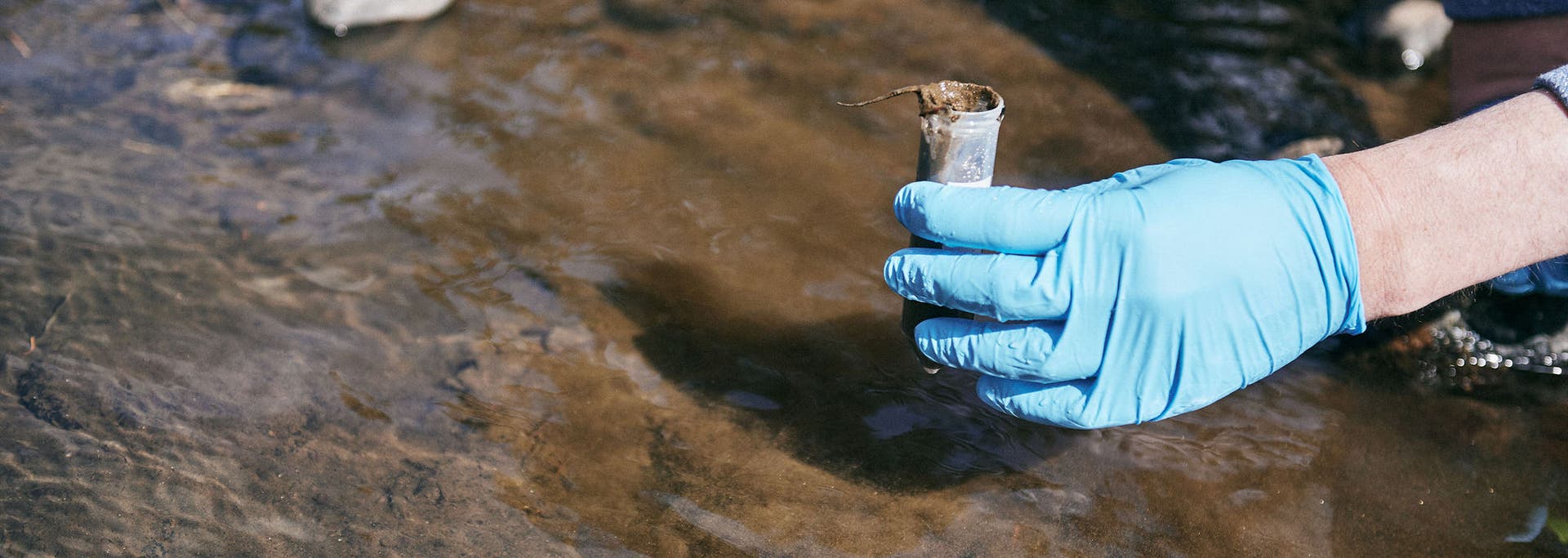
PFAS Analysis
Trace-level detection and quantification of PFAS
PFAS Workflows
Current and future limits
The analysis of poly-and perfluoroalkyl substances (PFAS) is now a regular test conducted across many environmental laboratories around the globe. The prevalence of PFAS compounds in environmental samples require an end to end workflow that is highly sensitive to quantify at parts per quadrillion levels (ppq), free from the spoils of contamination throughout the method, produces consistent, precise, and reliable results from injection to injection.
The demand for PFAS testing of drinking water, raw water, and soil is expanding. PFAS testing needs are now migrating outside of the typical matrices found in environmental analysis to food products, animal tissues, and human biological fluids. Therefore, depending on the type of analysis your laboratory performs, the chosen workflow must be adaptable and robust to analyze various sample types for PFAS.
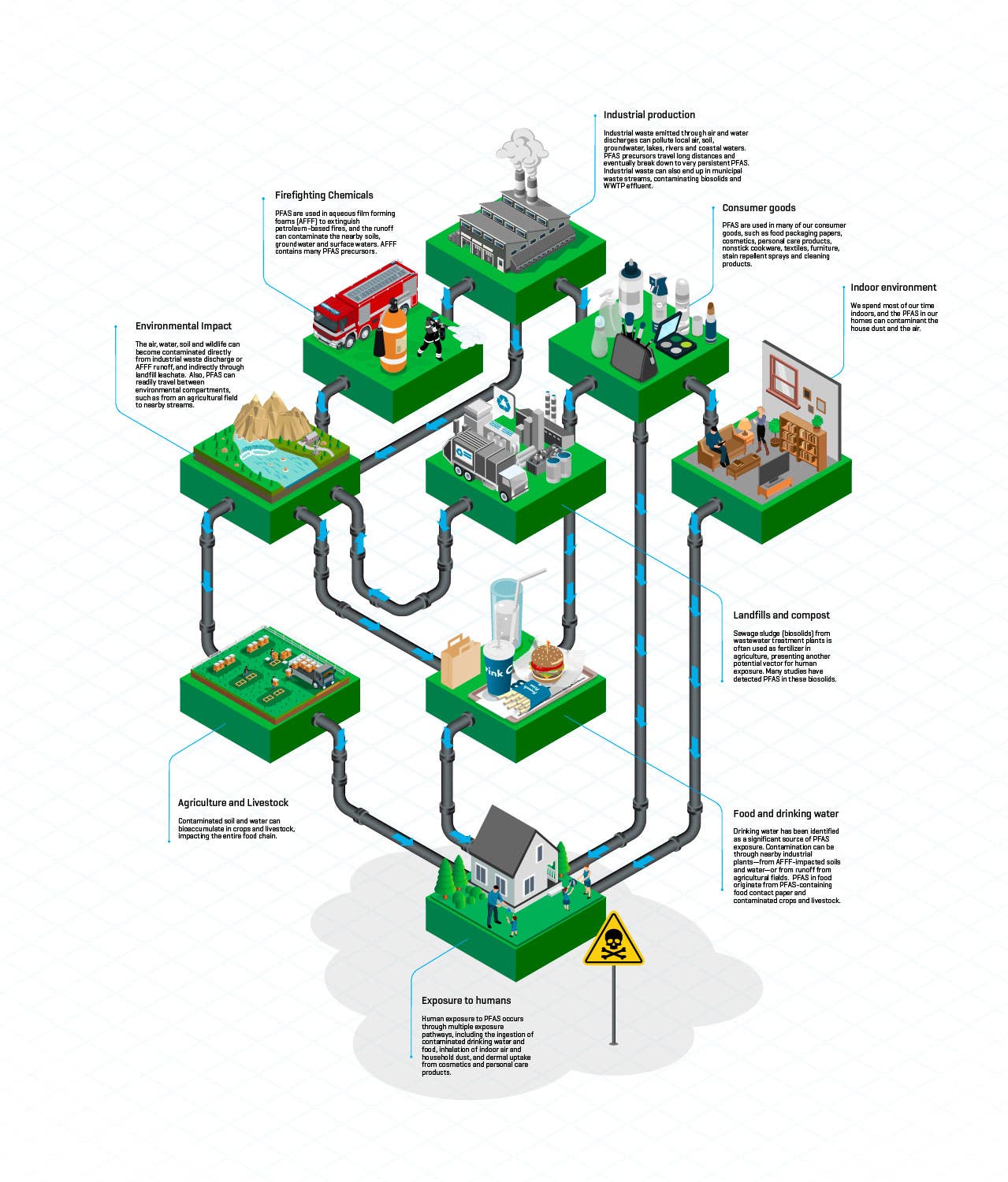
PFAS Workflows
A new series of advisory levels for PFAS
April 2024 saw the final announcement from the EPA announcing the National Primary Drinking Water Regulation, stating the Maximum Contaminant Level (MCL) for six PFAS compounds in drinking water. Collaborating with industry experts, the SCIEX PFAS team are constantly challenging the status quo on the best PFAS applications our instruments can offer to our users, as evidenced by the technical materials and scientific knowledge presented below.
Key developments in PFAS regulation and guidelines
Legal actions against PFAS
The Superfund law designated PFOA and PFOS as hazardous under the Comprehensive Environmental Response, Compensation, and Liability Act (CERCLA). This aligns with regional regulation updates, including the European Union (EU) and New York banning PFAS in food packaging, and New Zealand banning PFAS in cosmetics.
Updated advisory levels
The US EPA's early announcements set advisory levels for PFAS in drinking water, including PFOA, PFOS, GenX, and PFBS. Initially, Health Advisories (HAs) were proposed as low as 4 parts-per-quadrillion (PPQ). SCIEX PFAS experts were pioneers in developing working methods for this using sensitive LC-MS/MS instrumentation.
Government-led guidelines
Several government guidelines have been introduced to regulate PFAS and protect against human exposure. The European Chemicals Agency (ECHA) led with a universal PFAS restriction proposal, covering a wide range of commercial products containing these chemicals.
Highlights from our keynote speakers on PFAS

Amy Rand
Assistant Professor, Charlton University
Presentation: Screening of PFAS in cosmetics and personal care products.
Watch presentation

Andrew Patterson
Technical Director, Eurofins Specialty Services
Presentation: The ever-changing landscape of the modern PFAS laboratory.
Watch presentation

Cora Young
Associate Professor and Guy Warwick Rogers Chair, York University
Presentation: Environmental fate and global distribution of PFAS
Watch presentation

Chris Higgins
PHD, University Distinguished Professor, Colorado School of Mines
Presentation: Advancing LC-MS analyses for characterizing human exposure to PFASs
Watch presentation
close
All keynote speakers on PFAS
Amy Rand
Assistant Professor, Charlton University
Presentation: Screening of PFAS in cosmetics and personal care products.
Watch presentation
Andrew Patterson
Technical Director, Eurofins Specialty Services
Presentation: The ever-changing landscape of the modern PFAS laboratory.
Watch presentation
Cora Young
Associate Professor and Guy Warwick Rogers Chair, York University
Presentation: Environmental fate and global distribution of PFAS
Watch presentation
Chris Higgins
PHD, University Distinguished Professor, Colorado School of Mines
Presentation: Advancing LC-MS analyses for characterizing human exposure to PFASs
Watch presentation
Meet the SCIEX PFAS experts
Craig M. Butt, PhD
Craig obtained his PhD in environmental chemistry at the University of Toronto, under the co-supervision of Dr. Scott Mabury and Dr. Derek Muir (Environment Canada), where he investigated the fate of PFAS in biological systems. Craig was then an NSERC postdoctoral research fellow and research scientist at Duke University, under the guidance of Dr. Heather Stapleton. Among other interesting topics, Craig’s postdoctoral research involved measuring human PFAS exposure in serum, handwipes and wristbands.
In his 20 years of mass spectrometry experience, Craig has published 48 peer-reviewed manuscripts, many of which are on PFAS, are globally recognized and are highly cited. Within SCIEX, Craig is the applications lead for all things PFAS and has contributed to a variety of PFAS-specific applications, including EPA Methods 537.1 and 533.
Resouces
-
Environmental testing community
-
PFAS fireside chats with Dr. Craig Butt
-
EPA method 533 at low parts-per-trillion levels
-
Analysis of PFAS in drinking water with EPA method 537.1
-
Screening for legacy and novel PFASs using SCIEX Fluoros Library 2.0
-
Quantitation of PFASs in water samples
-
Analysis of EPA Method 537 using microflow liquid chromatography
-
Rapid response of arctic ringed seals to changes in Perfluoroalkyl production
-
Elucidating the pathways of Poly- and Perfluorinated acid formation in rainbow trout

Simon Roberts, PhD
As a postdoctoral fellow at the Colorado School of Mines, Simon worked with Dr. Christopher Higgins and Dr. Jennifer Field to identify novel classes of PFAS chemicals in aqueous film-forming foams (AFFFs). At SCIEX, Simon specializes in method optimization and data reporting as he helps labs around the country set up PFAS and other environmental analytical methods.
Fun fact: Simon even wrote a song about PFAS; yeah, he’s that serious about this stuff! Watch Like a Forever Chemical and enjoy.
Resouces
-
Analysis of PFAS in drinking water with EPA method 537.1
-
Quantitation of PFASs in water samples
-
Analysis of EPA Method 537
-
Bring PFAS testing in house with SCIEX and Phenomenex
-
Discovery of 40 classes of Per- and Polyfluoroalkyl Substances in historical Aqueous Film-Forming Foams (AFFFs) and AFFF-impacted groundwater

Megumi Shimizu, PhD
Megumi received her PhD in Marine Science from Duke University, with Dr. Cindy Van Dover, and worked as a postdoctoral research associate at the University of North Carolina, Wilmington, in Dr. Ralph Mead’s lab.
Her postdoctoral research investigated emerging PFAS in diverse environmental media.
Megumi brings expertise on emerging contaminants in environmental samples, including water, sediments and atmospheric depositions to the SCIEX team.

Karl Oetjen, PhD
Karl completed his PhD at Colorado School of Mines under the supervision of Dr. Christopher Higgins. Karl’s research focused on non-targeted characterization of complex surfactant mixtures, including aqueous film-forming foams (AFFFs). This work led to the discovery of several novel PFAS that since have been found in a variety of environmental samples and industrial chemicals.
At SCIEX, Karl creates and implements both regulated and unregulated, quantitative and qualitative, PFAS screening methods for our customers.
Resouces
-
EPA method 533 for PFAS analysis in drinking water
-
Screening for legacy and novel PFASs using SCIEX Fluoros Library 2.0
-
Analysis of EPA Method 537
-
Discovery of 40 classes of Per- and Polyfluoroalkyl Substances in Historical Aqueous Film-Forming Foams (AFFFs) and AFFF-Impacted groundwater
-
Suspect screening of hydrocarbon surfactants in AFFFs and AFFF-Contaminated groundwater by High-Resolution Mass Spectrometry

Holly Lee, PhD
Holly completed her PhD with Dr. Scott Mabury at the University of Toronto, studying the biological and environmental processes involved in the fate of PFAS upon consumer disposal. Her work in wastewater incubation, agrocosm, sorption, bioaccumulation, and human exposure demonstrated a clear link between the use of commercial products containing PFAS and the fluorochemical burden observed in both humans and the environment.
Holly was a Senior Analytical Technologist at the Ontario Ministry of the Environment, Conservation and Parks, developing methods on emerging contaminants such as nonylphenols in environmental samples.
Since joining SCIEX in 2016, Holly has worked in R&D of mass spectrometry software products and recently transitioned to global technical marketing in food LC-MS/MS applications.
Resouces
-
Sorption of Perfluoroalkyl Phosphonates and Perfluoroalkyl Phosphinates in soils
-
Investigating the biodegradability of a fluorotelomer-based acrylate polymer in a soil–plant microcosm by indirect and direct analysis
-
Cooking fish is not effective in reducing exposure to perfluoroalkyl and polyfluoroalkyl substances
-
Fate of Polyfluoroalkyl Phosphate diesters and their metabolites in biosolids-applied soil: Biodegradation and plant uptake in greenhouse and field experiments
-
Transformation products of emerging contaminants in the environment: Analysis, processes, occurrence, effects and risks
-
Dietary bioaccumulation of Perfluorophosphonates and Perfluorophosphinates in juvenile rainbow trout: Evidence of metabolism of Perfluorophosphinates
-
A pilot survey of legacy and current commercial fluorinated chemicals in human sera from United States donors in 2009
-
Biodegradation of Polyfluoroalkyl Phosphates as a source of Perfluorinated Acids to the environment

Jianru Stahl-Zeng, PhD
Jianru joined SCIEX in 2001 to support the SCIEX application team in proteomics and small molecules. She moved to the technical marketing team to focused on food, environmental, and beverage applications.
Jianru is also the Global Technical Lead for food and beverage applications. Jianru leads multiple PFAS analysis projects within the European regulatory landscape.

Key products and methods
Advanced solutions for accurate PFAS detection and quantification
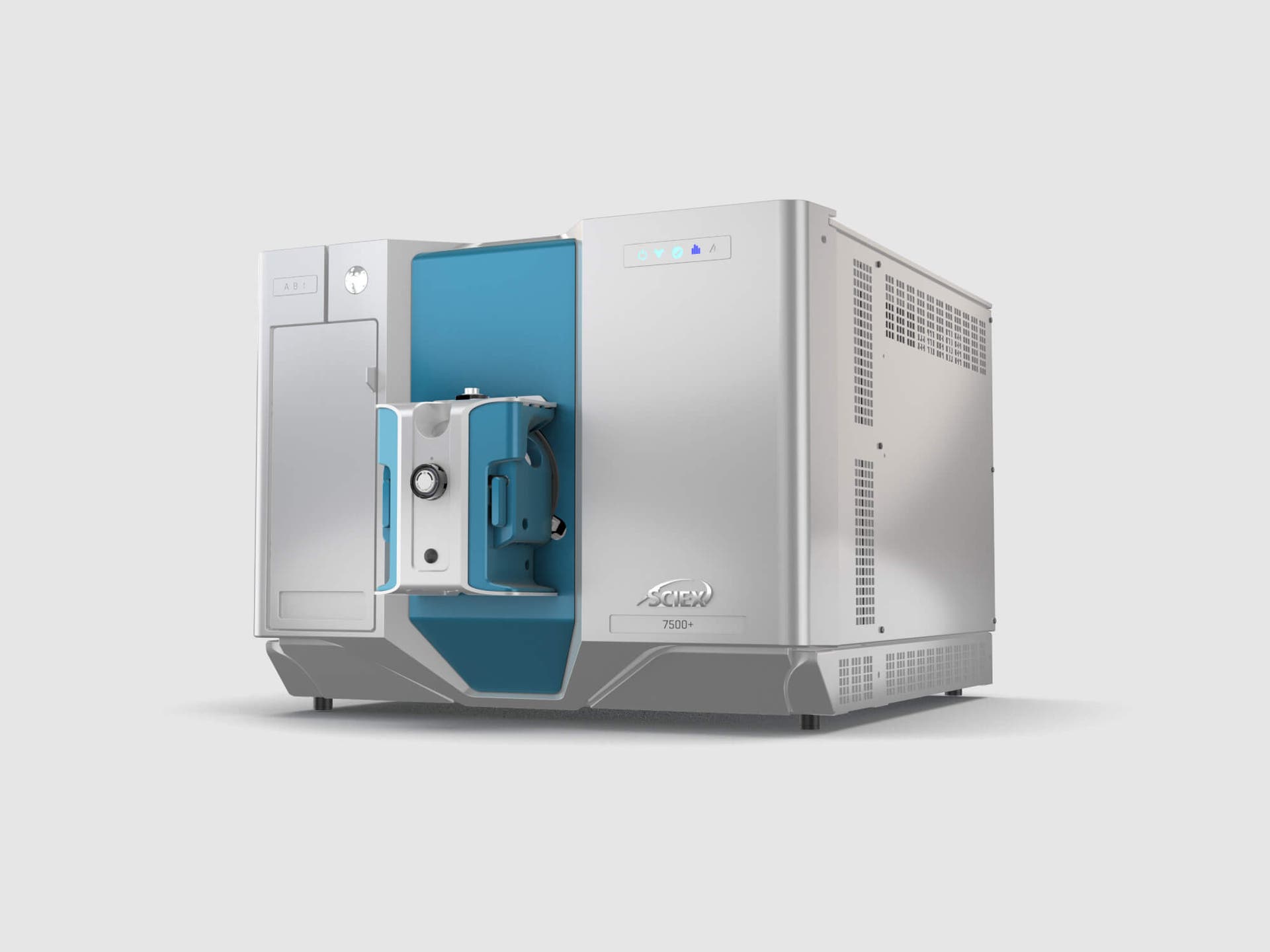
SCIEX 7500+ system
Detect the previously undetectable and quantify at lower levels than ever before with impressive precision.
Learn more
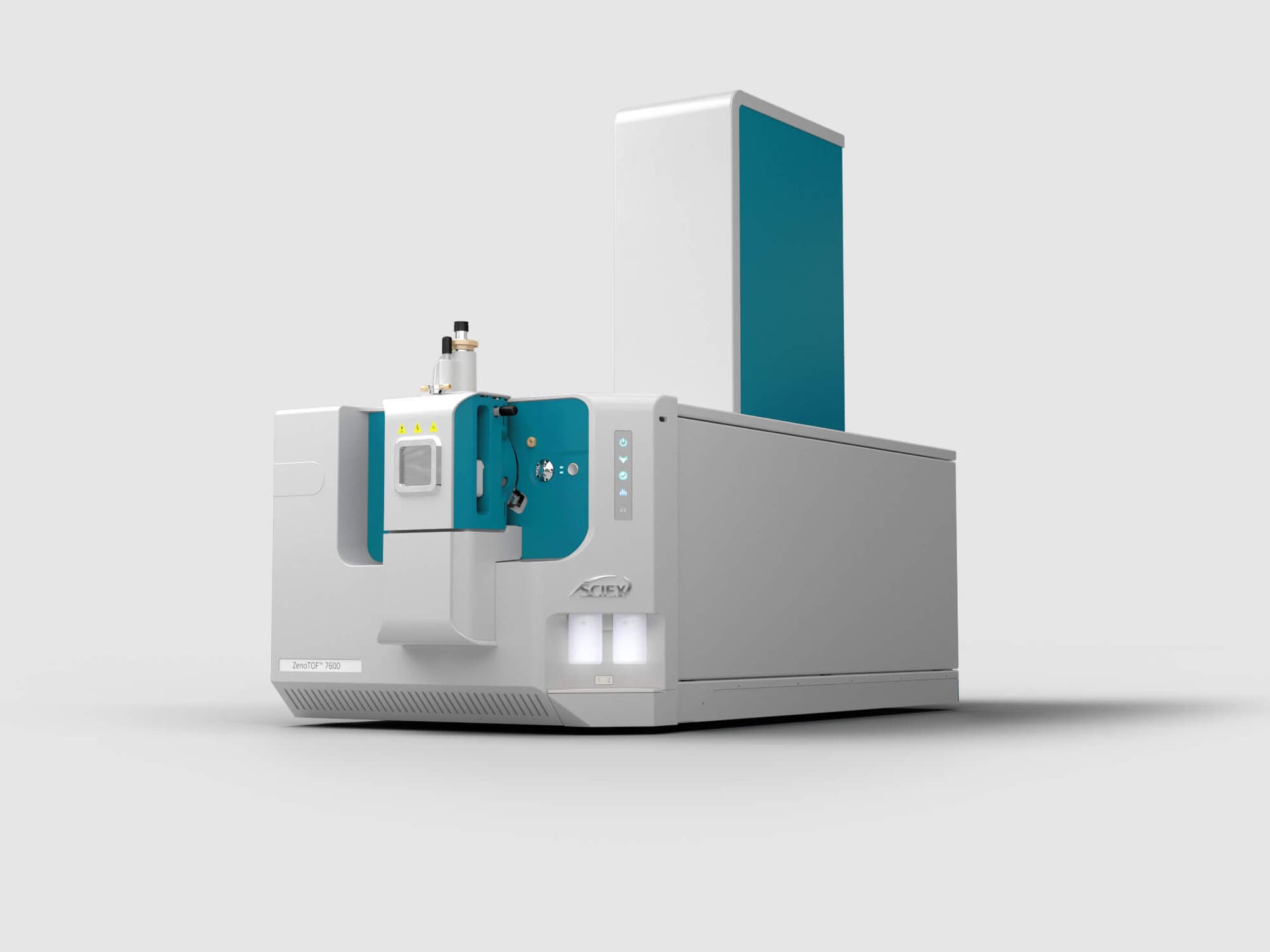
ZenoTOF 7600 system
A high-resolution mass spectrometry solution that combines powerful MS/MS sensitivity, fragmentation technology and a step-change in data independent acquisition.
Learn more

Fluorochemical MS/MS Spectral Library
This verified library contains spectra for 96 flurorochemicals and their metabolites commonly tested in environmental samples, enabling you to easily create methods and processes for targeted and non-targeted screening on your complex samples. (v2.0 has about 250 compounds, with the addition of many AFFF-derived compounds).
Learn more
Method library
EPA method 533
Achieve reporting limits of 2ng/L with excellent linear dynamic range and support your EPA 533 and UCMR5? requirements.
Learn more
EPA Method 537.1
Detect 14 PFAS compounds in drinking water with EPA Method 537.1 guidelines in just 10 minutes.
Learn more

EU drinking water directives
Meet regulatory limits by characterizing and quantifying PFAS and GenX in water using liquid chromatography-mass spectrometry.
Learn more
Featured resources
-
Technical note
An ultra-high sensitivity analysis of PFAS compounds in multiple water sources
In this method sub-parts per trillion (ppt) levels of detection for 26 PFAS compounds was achieved with LOD values of 0.2 ng/L in diluent and calculated method detection limits in drinking, ground, and surface water ranging between 0.06 ng/L and 1.12 ng/L.
-
Technical note
Achieving low parts-per-quadrillion detection limits for PFAS analysis in drinking water
A collaborative exploration of instrument sensitivity and sample preparation for ultra-trace analysis of PFAS on the SCIEX 7500 system.
Data gallery
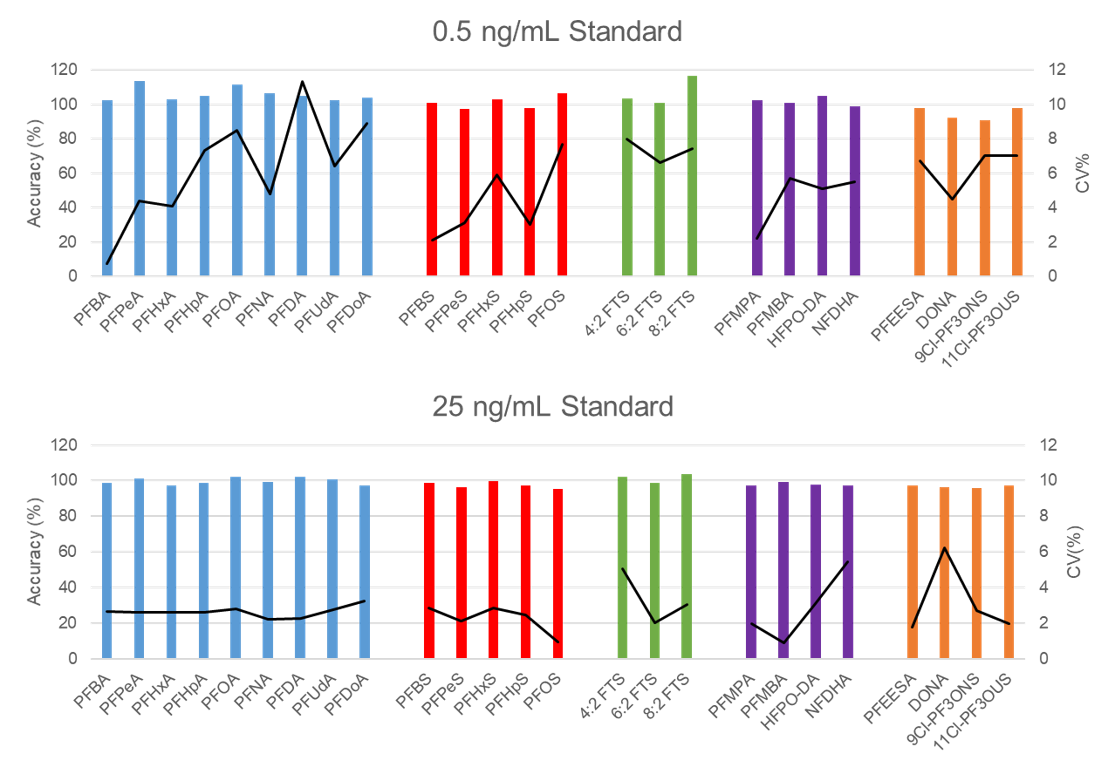
Excellent accuracy (left axis) and precision (right axis) for full suite of compounds in EPA method 533 for the analysis of PFAS in drinking water. Accuracy was generally 100% ± 5%, and CV% was ~5% for both the 0.5 ng/mL and 25 ng/mL standards.
Electron activated dissociation (EAD) fragmentation produced a richer MS/MS spectrum as compared to traditional collision induced dissociation (CID) for improved confidence in unknown PFAS compound identification.
Unknown PFAS compound identification in Cape Fear River sediment using the X500R QTOF and SWATH acquisition. NVHOS (C4F8H2O4S) was confirmed using by the precursor mass error (left panel). Also, MS/MS spectrum matched theoretical fragments (right panel).
X500R QTOF mass resolves endogenous PFOS interferences in pooled human serum/plasma. Bottom panel shows that the biological interference and PFOS had different precursor accurate masses and isotope patterns.
Starting your PFAS journey?
Liquid chromatography-tandem mass spectrometry (LC-MS/MS) technology leads the way in testing for both known and unknown poly- and perfluoroalkyl substances (PFAS) in drinking water, wastewater, and soil. Its sensitivity and robustness make LC-MS/MS the ideal choice for quantitative analysis of these persistent pollutants.
Get the tools and protocols for fast, robust, and accurate quantification of trace PFAS levels in drinking water. Download the Beginner's guide to detect, quantify, and identify PFAS and GenX compounds with confidence.
Understanding PFAS testing with LC-MS/MS
The solution for PFAS and GenX quantification
LC-MS/MS has revolutionized PFAS detection, quantification, and understanding. At SCIEX, we recognize the challenges of high sample volumes and tight deadlines. Our LC-MS/MS solutions maximize productivity and provide high-quality data for identifying and quantifying PFAS. LC-MS/MS is ideal for environmental sample monitoring because it:
- Measures a wide range of chemical compounds
- Detects low levels of toxins
- Ensures reliability and accuracy
- Isolates and detects analytes with minimal interference
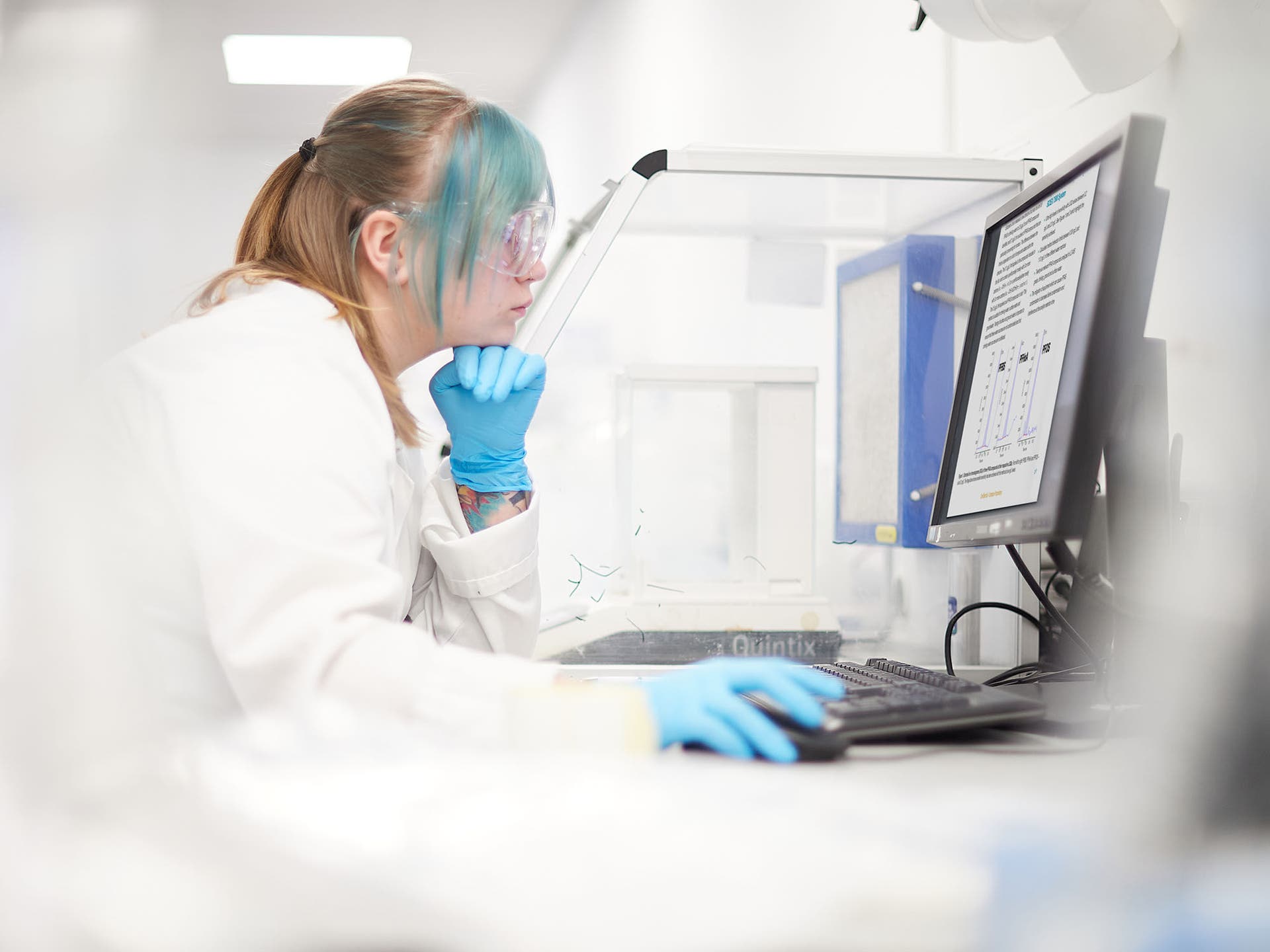
LC-MS/MS has transformed the path to detecting, quantifying, and understanding PFAS. At SCIEX, we understand your lab is challenged with high sample volume and impending deadlines, and unreliable instrument systems are just unacceptable. Whether your laboratory needs to identify new PFAS or routinely quantify them, PFAS testing with LC-MS/MS solutions from SCIEX will help you maximize productivity, while consistently providing you with the high-quality data you need.
Our sister company Phenomenex provides all the required consumables and resources for PFAS testing, from Stacked Solid Phase Extraction solutions to optimized LC columns PFAS section
Check out these additional PFAS resources from Phenomenex:
PFAS resources
Filter:
-
Technical note
An ultra-high sensitivity analysis of PFAS compounds in multiple water sources
In this method sub-parts per trillion (ppt) levels of detection for 26 PFAS compounds was achieved with LOD values of 0.2 ng/L in diluent and calculated method detection limits in drinking, ground, and surface water ranging between 0.06 ng/L and 1.12 ng/L
-
Technical note
Screening for legacy and novel PFASs using SCIEX Fluoros Library 2.0
Currently there are more than 3000 Per- and Poly- fluorinated substance (PFAS) products that were or are available on the global market. Changing regulations and concern for human environmental impact make detection and identification of PFAS a high priority for many environmental testing laboratories. Many of these products may be not well understood or well characterized, and analytical grade standards are often unavailable, limiting the comprehensibility of targeted methods. Therefore, many laboratories have included suspect screening workflows in their routine analysis. Suspect screening allows laboratories to search against a spectral library or database of characterized compounds without the need of authentic standards, saving time and allowing for a more comprehensive characterization of environmental samples.
-
Technical note
Quantitation of PFASs in water samples using LC-MS/MS large-volume direct injection and solid phase extraction
This technical note describes two methods for the quantitation of per- and polyfluorinated alkyl substances (PFASs) in water samples. Both methods achieved accurate quantitation at levels of approximately 1-10 ng/L for more than 17 PFASs. Method 1 is compatibility with EPA Method 537.
-
Technical note
Simple and rapid quantification of per- and polyfluoroalkyl substances (PFAS) in seawater
In this technical note, a method is presented for quantifying per-and polyfluoroalkyl compounds (PFAS) in seawater at the low ng/L range using a simple sample preparation approach, with no solid phase extraction (SPE). The sensitivity of the SCIEX 7500 system1 allowed for the ultra-trace level quantification of PFAS in un-spiked seawater samples using only direct injection analysis
-
Technical note
Achieving low parts-per-quadrillion detection limits for PFAS analysis in drinking water
This collaborative technical note demonstrated the ability to meet the ultra-trace levels of detection required for the 2022 EPA drinking water health advisory levels for PFAS. Future experiments will include an MDL study at the 4 and 20 ppq (pg/L) spiking levels for PFOA and PFOS, respectively.
-
Video
Finding PFAS in people
PFAS quantification at trace levels (parts per trillion) can routinely be achieved by sensitivity triple quad mass spectrometers. PFAS, PFOA, PFOS, GenX, etc can be detected and measured with high precision. A large proportion of PFAS ‘unknowns’ exist in human serum however, and required advanced accurate mass workflows with QTOFs to identify the unknowns. Targeted serum analysis coupled with high resolution MRM quantification and non-targeted acquisition with suspect screening enables compound identification as well as fragmentation specificity. Watch this video series to discover how you can Find PFAS in People
-
PDF
PFAS in me
Bioaccumulation of PFAS in the human body resulting from environmental exposure is a growing public health concern. Recent studies have linked PFAS exposure to adverse health outcomes, including childhood health complications, reduction in kidney functions, thyroid disease, hormone suppression, decreased fertility, increased cholesterol levels, and diabetes, among others.
-
Technical note
Rapid LC-MS/MS method for monitoring bio-relevant levels of per-and polyfluoroalkyl substances (PFAS) in serum
Here, a comprehensive workflow using the SCIEX QTRAP 6500+ System for the analysis of 22 PFASs in serum is presented. This targeted screening workflow is shown to provide a fast, robust and sensitive analytical method capable of accurately quantifying sub-nanogram per mL levels of PFASs in human serum. Here, a comprehensive workflow using the SCIEX QTRAP 6500+ System for the analysis of 22 PFASs in serum is presented. This targeted screening workflow is shown to provide a fast, robust and sensitive analytical method capable of accurately quantifying sub-nanogram per mL levels of PFASs in human serum.
-
Technical note
Confident quantification of per- and polyfluoroalkyl substances in water intended for human consumption
An accurate and robust LC-MRM method using a smaller volume direct injection approach has been developed on the QTRAP 6500+ system, with sensitivity demonstrated to easily meet the current recommended limits set by the European authorities for drinking water (February 2020). Several PFAS specific analytical challenges have been addressed with this method, ensuring the method is easily implemented into labs. Data was also generated on the SCIEX 7500 system to highlight the advantages of increased sensitivity.
-
Technical note
Identification and quantification of PFAS in food contact materials using MRMHR Workflow on X500R QTOF System
PFAS are widely used in plastic packaging materials for food and as coating in non-stick pans. MRMHR quantification enables detection and quantification of PFAS to meet EU regulation, national standards in China.
-
Technical note
Analysis of hexafluoropropylene oxide dimer acid (HFPO-DA), commonly known as Gen-X, and related PFAS compounds
Gen-X is an emerging polyfluorinated alkyl substance, hexafluoroprolyene oxide (HFPO-DA), and it with other novel PFAS is shown as part of a multi-component PFAS acquisition method. Gen-X and several PFOS-replacement compounds were optimized on the SCIEX Triple Quad™ 4500 System.
-
Technical note
Analysis of PFAS in drinking water with EPA method 537.1 and the SCIEX QTRAP 4500 system
In order to protect the safety of drinking water and human health, the EPA releases methods for the detection of contaminants. The EPA method 537.1 describes the detection of selected per- and polyfluorinated alkyl substances in drinking water. Here a robust LC-MRM assay was developed using the QTRAP 4500 system for PFAS detection. Sensitive MDLs of 0.08-0.2 ng/L for all of 14 PFAS compounds in EPA method 537 were achieved, all of which meet or exceed the requirements of the US EPA’s UCMR3 list in a 10 minute run.
-
Technical note
Use of electron activated dissociation (EAD) to elucidate PFAS structures
Poly- and perfluoroalkyl substances (PFAS) are widely used and are now broadly detected in the environment. There are an estimated 5,000 unique PFAS manufactured making determination of the specific PFAS compound challenging. Structural assignment depends on obtaining high quality MS/MS spectra, but traditional collision-induced dissociation (CID) do not always yield enough information to provide definitive assignment. Here , electron activated dissociation (EAD) has been evaluated to determine whether this orthogonal fragmentation mode can improve qualitative PFAS structure elucidation.
-
Technical note
GenX and legacy PFAS analysis in water and sediment with high selectivity and sensitivity
GenX is a replacement chemical for PFOA and increasingly high levels of GenX contamination in the environment near manufacturing plants is being reported. HRMS is important in monitoring these novel PFAS compounds in complex matrices due to the additional selectivity possible. Here, a targeted method for the detection of perfluoroalkyl ether carboxylic acids (PFECAs), including GenX (HFPO-DA) and shorter-chain analogues, in water and sediment samples was developed using the SCIEX X500 QTOF system. Low to mid parts-per-trillion detection limits with enhanced selectivity were obtained.
-
Technical note
Analysis of PFAS at low ppt levels in drinking water via EPA method 533
Per- and polyfluorinated alkyl substances (PFAS) are a group of manmade chemicals that are known to enter the water supply and bioaccumulate in watershed ecosystems. Hence, the US EPA published the fifth unregulated contaminant monitoring rule (UCMR5)5, which proposes maximum residue limits (MRL) for PFAS residues in EPA method 533. A method has been developed here using solid phase extraction (SPE) and the SCIEX Triple Quad 4500 system monitoring 22 different PFAS species. Observed sensitivity and reproducibility meets the UCMR5 requirements for EPA method 533 compounds.
-
Technical note
PFAS identification in serum and plasma using data-independent acquisition and MS/MS library matching
In this technical note, the SCIEX X500 QTOF system was used to analyze PFAS in human serum. An unbiased and non-targeted workflow with automatic library matching allowed for wider, comprehensive sample analysis. Additionally, a streamlined sample preparation strategy maintained sample integrity while providing greater laboratory efficiency.
-
Technical note
EPA method 533 for PFAS analysis in drinking water at low parts-per-trillion levels
PFAS drinking water analysis by EPA Method 5331 using the SCIEX 5500+ System. Excellent sensitivity and precision were as shown; the “in-sample” minimum reporting limits were 2 ng/L for all analytes except PFHpA which was 4 ng/L. Novel perfluorinated ether carboxylic and sulfonic acids were detected in 0.50 ng/mL standard, which corresponds to 2 ng/L in sample, significantly below the US EPA drinking water guidelines of 70 ng/L for PFOS and PFOA. Custom built calculations and flagging rules in SCIEX OS Software streamlined data review and report generation.
-
Technical note
Reducing PFAS interferences during human plasma and serum analysis with accurate mass spectrometry
Co-eluting interferences in biological matrices have been shown for PFOS and PFHxS when monitoring the [SO3]- fragment ion. Here, accurate mass spectrometry was used to mass resolve PFOS & PFHxS from these interferences. The separation used was able to chromatographically resolve the interferences using a 6.5 minute gradient. The interferences were then characterized using their MS/MS fragmentation spectra and library searching.
-
Technical note
Low-level quantification of PFAS in water samples with high sensitivity and precision
Per- and polyfluoroalkyl substances (PFAS) have excellent stain repellent properties and are thus widely used in packaging materials, firefighting foams and many other uses. As PFAS have been found in virtually every environmental matrix including drinking water supplies, making monitoring critical to ensure safety. Here, a comprehensive quantitative method for a suite of PFAS compounds was developed for analysis of water samples on the SCIEX 7500 system. This high sensitivity system provided S/N gains of ~5.5x on average across the 54 compounds analyzed versus the SCIEX 6500+ system..
-
Technical note
Reducing the effects of system contamination in PFAS analysis
Because of the pervasive nature of PFAS and the suggested PFAS detection limits continuingly being decreased in environmental sample analysis, there is an increasing need to have LC-MS strategies that can effectively manage PFAS background. Here, a workflow was established on the ExionLC 2.0 system with the optional wash system using delay columns to separate background PFAS contamination from sample analysis. An assay for 52 PFAS analytes was used to characterize the performance attributes of the LC system, including carryover. Analysis was performed using the SCIEX Triple Quad 7500 system to obtain very high sensitivity.
-
Technical note
Achieving exceptional robustness for PFAS analysis in food with the next-generation SCIEX 7500+ system
This technical note demonstrates >2x robustness improvement for the analysis of PFAS food extracts on the SCIEX 7500+ system. At the end of the study, comprising over 6400 food matrix injections, the majority of PFAS compounds (10 out 13) maintained >70% of the initial sensitivity.
Impact
Reducing the environmental impact of our operations
SCIEX aims to reduce the environmental impact of our operations by increasing energy efficiency, deploying renewable energy systems, and minimizing waste through circular waste models that reuse resources indefinitely. R&D and service operations aim to achieve this through thoughtful sustainability initiatives across global manufacturing.